Comment Done
Navigation
HomePYQs Question BankCSE Physics OptionalIFoS Physics OptionalBlog & InsightsCourses & ProgrammesFree materialsMy Courses (Candidate Portal)
Account
/
20 questions visible on this page

What are damped oscillations ? Obtain the differential equation for damped oscillations and write its possible solution. Explain with corresponding sketches, when there can be very heavy damping, critical damping and weak damping.

CSE 1999Paper I20 markscse-1999-subject-02-003

Write a short note on Holography.

CSE 1999Paper I20 markscse-1999-p1-q8-vi

Write a short note on Forced oscillations.

CSE 1999Paper I20 markscse-1999-p1-q8-iv

Write a short note on Applications of Bernoulli's equation.

CSE 1999Paper I20 markscse-1999-p1-q8-ii

Write a short note on Geostationary satellites.

CSE 1999Paper I20 markscse-1999-p1-q8-i

Prove that the expression x^2+y^2+z^2-c^2t^2 is invariant under Lorentz transformation.

CSE 1999Paper I20 markscse-1999-subject-01-010

How do we infer the law of conservation of linear momentum from Newton's laws of motion? A stationary bomb explodes and on explosion, it fragments into three parts. Two of these part which are of equal masses fly apart perpendicular to each other with a velocity of 60 m/s each. The third part has a mass four times the other two. Find the magnitude and the direction of the velocity of the third part.

CSE 1999Paper I20 markscse-1999-subject-01-009

Discuss the Reynolds number for describing the stability of fluid flow, Air streams horizontally across an aeroplane wing of area 4\text{ m}^2 and weighing 300 kg. The air speed is 60 m/s and 40 m/s over the top surface and under the bottom surface respectively. Find (i) the lift on the wing and (ii) the net force on it, given that the density of air is equal to 1.293\text{ kg/m}^3.

CSE 1999Paper I20 markscse-1999-subject-01-008

Starting from the definition of angular momentum of a single particle, obtain an expression for the angular momentum of a rotating rigid body. Hence, discuss the time derivative of the angular momentum and deduce the law of conservation of momentum.

CSE 1999Paper I20 markscse-1999-subject-01-007

Explain the precession of a spinning top and show that precssional angular velocity is independent of the angle of inclination. A top is spinning with 20 rev/s about an axis inclined at 30^\circ with the vertical. Its radius of gyration is 5 cm. The centre of mass is \pi cm from the pivot point. Calculate the frequency of precession.

CSE 1999Paper I20 markscse-1999-subject-01-006

Distinguish between elastic and inelastic collision. Find the minimum distance an \alpha-particle with kinetic energy of 0.4 Mev can approach a stationary but free Lithium nucleus in a head-on collision.

CSE 1999Paper I20 markscse-1999-subject-01-003

Consider the motion of a rocket in a gravitational field and derive an expression for its final velocity when the fuel burns at a constant rate till it is fully consumed.

CSE 1999Paper I20 markscse-1999-subject-01-002

Describe the set-up of Michelson-Morley experiment. Why was a fringe shift expected in it? How are its negative results understood?

CSE 1999Paper I20 markscse-1999-subject-01-001

Simplify the following logic function and draw the corresponding logic diagram:- Y = (A+B).(A + C).(B+C)

CSE 1998Paper II20 markscse-1998-subject-08-005

Distinguish qualitatively between dia-, para-, ferro-, antiferro- and ferrimagnetism. How is the weak and temperature independence paramagnetism of metals explain?

CSE 1998Paper II20 markscse-1998-subject-08-001

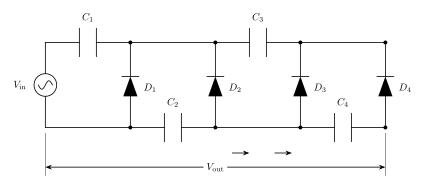
If E_0 is the peak value of the input voltage V_{in} calculate the output voltage V_{out}.

Physics Diagram cse-q-8-170-fig-1
CSE 1998Paper II20 markscse-1998-subject-08-002

Explain the working N-P-N transistor. Derive expression for the current and voltage gains.

CSE 1998Paper II20 markscse-1998-subject-08-003

What is the photovoltaic mode of operation for a photo-diode? Describe the construction and working of a silicon solar cell.

CSE 1998Paper II20 markscse-1998-subject-08-004

What is the basis of thermonuclear fusion? Estimate the order of temperatures required for promoting the fusion reaction of lighter nuclei. Calculate the Q-value of the proton-proton cycle. 4 {}_1^1 H \rightarrow {}_2^4 He + 2 {}_{+1}^0 e + Q.

CSE 1998Paper II20 markscse-1998-subject-07-001

In nature, we have basically four kinds of forces in the following order of increasing interaction strength: (i) Gravitational (ii) Weak (iii) electromagnetic (iv) Nuclear or strong Comment on their spatial dependence and give their strength in terms of dimensionless coupling constants.

CSE 1998Paper II20 markscse-1998-subject-07-002

Document & Diagram Scanner

Clean whiteboard & high-contrast scan with automatic image enhancement

Filter:
-- × -- pxCompressed: -- KB--% saved